
The English Seed-Dressing Crisis
Silent SpringThis flow follows the reports of bird mortality after insecticides were added to treated seed in England.
increasing Bearing strength in each event
 decreasing
Bearing strength in each eventdecreasingA Change in Seed Treatment
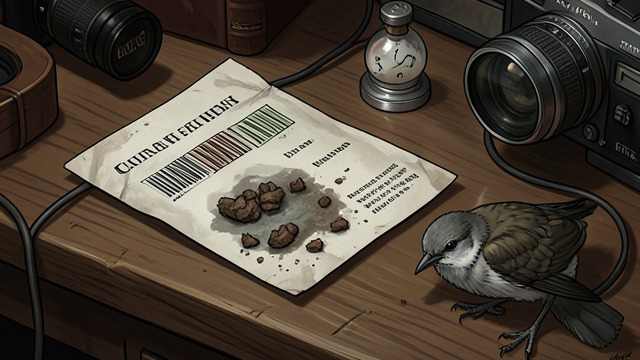
A New Mixture
Earlier Practice
Seed treatment had long been used, principally with fungicides, without the same pattern of reported bird deaths. A later change added insecticides to address soil pests.
Greater Toxicity
Dieldrin, aldrin, and heptachlor were incorporated into seed dressings. The new practice exposed seed-eating birds to chemicals that persisted in treated fields.
Reports Arrive From Farms
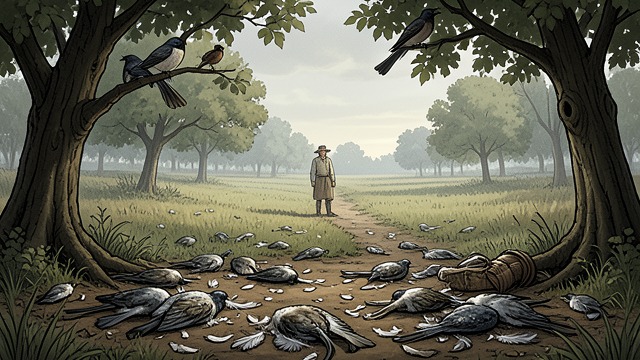
A Field of Dead Birds
Local Testimony
Landowners and gamekeepers reported dead partridges and small birds after treated seed was sown. One described the place as resembling a battlefield.
A National Record
The British Trust for Ornithology and Royal Society for the Protection of Birds assembled reports of kills across several counties. The reports showed that the problem was not an isolated farm incident.
The Deaths Spread
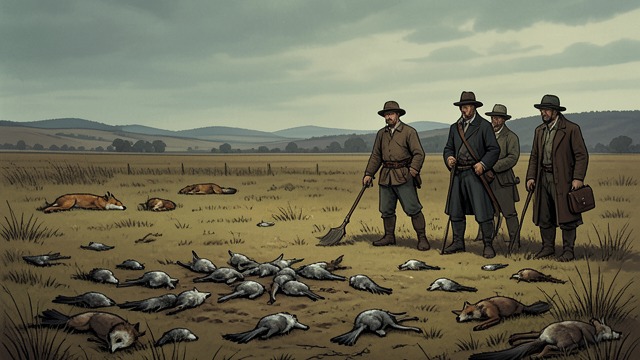
More Counties Affected
A Larger Toll
Reports expanded across agricultural England, including large losses on individual estates and farms. Observers also described pigeons and birds of prey disappearing from areas where deaths were reported.
Food-Chain Concern
Foxes also died in affected counties, suggesting that poison could move from seed-eating animals to predators. The pattern widened the issue beyond birds that directly consumed treated seed.
A Parliamentary Inquiry

Official Concern
Evidence Examined
A House of Commons committee heard from farmers, landowners, and representatives of government and wildlife organizations. Witnesses described unusually severe risks to wildlife and game.
Inadequate Testing
Analytical capacity was limited, while many manufacturers’ tests did not include wild birds or field conditions. The inquiry exposed a gap between laboratory testing and the real environments receiving treated seed.
A Call for Prohibition

Restricting Dangerous Dressings
Committee Recommendation
The committee urged immediate prohibition of seed dressings containing dieldrin, aldrin, heptachlor, or chemicals of comparable toxicity. It also called for stronger testing before products reached the market.
A Broader Warning
The episode illustrates how a routine agricultural technique can expose wildlife on a wide scale. Carson uses it to argue that field consequences must be studied before chemical use becomes established.
Around 1956
Spring 1960
Spring 1961
During 1961
After the 1961 hearings
